Search This Blog

Showing posts with label home invasion. Show all posts

Monday, November 20, 2017

Review: Like.Share.Follow

Like.Share.Follow. Poster
(imdb.com)
In recent years, horror and technology have converged. From found-footage films that use drones to entire plot lines needing the internet or Skype to function, these movies have a growing history in the genre. Building on this new world of digitalization and tying into last week's list of these movies is the newly released Like.Share.Follow.


Following a semi-famous teen Youtuber and his friends, Like.Share.Follow. is a winding exploration of obsessive celebrity culture and the length fans believe themselves to be a part of the lives of constantly status updating celebrities. Released alongside Totem by Cinemax, The movie takes a turn when a young woman decides to take her obsession to the next level and go from online-stalker to physical stalker, as she seeks out and becomes romantically attached to the Youtuber. The film stars Keiynan Lonsdale (Insurgent) as Garret, the Youtuber who is tricked into a relationship with his obsessive fan, Shell, played by Ema Horvath (Burning Kentucky).


Like many teen horror films, the quality of Like.Share.Follow. resides mostly in entertainment value, rather than actual scares. And unlike the aforementioned and previously reviewed Totem, Like.Share.Follow. is truly fun. Far more watchable thanks to Lonsdale who carries a large portion of the film on his charisma alone, Like.Share.Follow. isn't all that groundbreaking or original. But, it's definitely better than the comparative Totem and certainly way more enjoyable to watch. Horvath is also great in her role as the unhinged girl who simply cannot process that what she's doing is quite insane.


Like.Share.Follow. works best as an exploration of youth and digitalization. The very intimate nature of social media and the connection celebrities now must maintain with fans is on full display throughout the movie. Despite it's been there-done-that stalker premise, the heavy hand of modern life helps it stand out. This isn't just another recreation of The Roommate or Misery, it's its own thing altogether. It’s the type of movie that in a world of short attention spans is capable of holding audiences attentions with all its new gizmos and gadgets and atmosphere of “what-ifs.”


Like.Share.Follow. does the most with its stale narrative. With plenty of youth-driven plot devices and a great final punch, it's hard to deny the movie's personality. Turning out great performances by young stars and capturing the unhinged nature of stan culture, this movie is worth sitting through - even if you find that your phone is out the majority of the time. 6 out 10.

Friday, November 17, 2017

Best in Show: Digital Damnation (Pt. II of II)


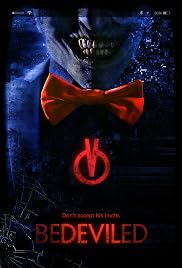
Bedeviled Poster
(imdb.com)
5. Bedeviled
Recency bias aside, Bedeviled does a fantastic job at capturing youth digital culture. The very basis of this film surrounds an app that seems like a must-have, but later turns into a must-be-stopped. With plenty of creepy scenes and a devilish voice crackling through mobile devices, Bedeviled is perfectly entertaining, even if a little silly. This film feels fresh thanks to its pairing of teenagers' attachment and need for their phone at all times and a demon that comes along with it.

Pulse Poster
(imdb.com)
4. Kairo (Pulse)
Kairo, a Japanese horror film that finds a number of victims battling an internet ghost, is a well-regarded classic. It's a slow-burning, dual-storyline flick that was one of the first digital horror movies of its kind. With a fantastic soundtrack, dreadfully tense moments and effective acting all make for a film that Is really well put together, even if early-2000 visuals run rampant in Kairo, taking away some of its power. But, despite this hurdle, Kairo is still scary - scary enough to watch now, even If our computers are very different and the impact of some of the more special effects are antiquated.

The Den Poster
(imdb.com)
3. The Den 
In The Den a young researcher's social experiment goes horribly wrong when she witnesses a murder on an online video chat room. In doing so, she unbeknown to her becomes the killer's next target. Easily one of the scarier found-footage films to come out of the modern era, The Den is intensely grounded, ensuring a terrifying time for those who live alone. The Den use of idle time spent with digital strangers to instill fear and it’s very effective.

Ringu Poster
(imdb.com)
2. Ringu/The Ring
The Ring was all the rage when it was released. One of those Asian-import remakes that managed to capture at least some of the original's fantastic horrors. Easily one of the most iconic horror films of all time with a ghoulish figure that has been recreated over and over, Ringu and The Ring are certainly classics. Each features the ghastly Samara who kills her victims seven days after they see a disturbing VHS tape. Later adapted for the more modern era, but better left in the day of VHS shelves, this franchise is deservedly a forefather of technological horror.

Sinister Poster
(imdb.com)
1. Sinister
While Ringu and The Ring are often considered the best of the best when it comes to horrific technology, it's hard to argue the deeply disturbing effectiveness of Bagul moving through pictures and video tapes. Sure, Ringu is a classic, but it continues to age and in a world where VHS isn't even accessible to most, it feels dated. Even with the follow up Rings, the magic seems almost lifted from these terrifying horror films. But, what has yet to be effected by time is the continually scary Sinister. More transcendent of time than The Ring franchise, the evil demon at the center of Sinister needs only images of himself to move among worlds - something that works especially well in homes filled with screens. From laptop images to pictographs to moving videos, Bagul can visibly stand the test of time and could continue to do so in theaters, even if its lackluster sequel underwhelmed.

Thursday, November 16, 2017

Best in Show: Digital Damnation (Pt. I of II)


As new technologies come forward, older generations seem more and more troubled by these progressive inventions. From fears of robot domination to unnerving sources of knowledge in phones, the real life horror of some advances is mostly overreaction. But, in the horror industry, the digital era comes with a bed full of terrifying possibilities to strike fear in viewers. From VHS tapes to Skype, filmmakers have plenty of options to terrify audiences of every age. Unfortunately, some of these films just can't capture terror. But, while movies like The Circle failed to make an impact, others like those on this week's list can stun and scare. These movies use current, real-life technology to make audiences afraid of their computers, media players and phones. They're not quite as futuristic as say, I, Robot, but that's what makes them even more haunting - they could (probably not, though) happen.


Friend Request Poster
(imdb.com)
10. Friend Request
The constantly to-be-released Friend Request isn't the scariest film, but it does a lot for the digital era of horror. Featuring some predictable, but good scares on Facebook and a curse caused by a mysterious and troubled Facebook friend and classmate, Friend Request makes the most of its mostly unfortunate lines of dialogue and subpar plot. One jump scare in particular is especially fantastic - so fantastic in fact, that it could elevate the film to slightly above average, rather than mediocrely watchable.


Like.Share.Follow. Poster
(imdb.com)
9. Like.Share.Follow
Part teen drama, part horror film, this new horror film doesn't break any ground, but it does a lot to pass the time. Exploring obsessive internet stardom and the way in which young people become obsessed with internet-famous stars, Like.Share.Follow. follows a stalker who becomes far too attached to a charming Youtuber. As the film progresses, nothing quite unpredictable happens, but for those searching for a more relevant and grounded film, this one's it. It's a dark and scary spiral to mediocre insanity - but it’s worth every second thanks to Keiynan Lonsdale (Dance Academy: The Movie) who's charisma all but carries the film on his back.


Ratter Poster
(imdb.com)
8. Ratter
Could strangers - and the government - be watching us through our laptop webcams? The jury is still out on that one, but in Ratter it takes this idea as fact and runs far with it. Make no mistake, this film, which follows a young woman who moved to New York City for school and later encounters a stalker, is a dreadfully slow burn. With nearly all the movie playing out with increasingly suspicious moments, the terrifying encounter with the stalker is dark and disturbing. Ratter is a home invasion flick where the invader is almost entirely on the outside of the home.


Stay Alive Poster
(imdb.com)
7. Stay Alive
Horror video games have their own special place in genre fans' hearts. For years, their existence has pushed boundaries, terrified players and made the horror experience more immersive and interactive. But, what happens when a horror game transcends into real life? That's the premise of 2006's Stay Alive. While somewhat dated, this entertaining and intriguing horror film found a group of friends attempting to outlast their characters in a video game with real world consequences. The premise of dying in a game and in turn, actually dying isn't necessarily the most groundbreaking, but it is creative. Like Jumanji for teens, Stay Alive is crazed and unrealistic, but deeply terrifying.


Unfriended Poster
(imdb.com)
6. Unfriended
The surprise hit that is Unfriended was pretty revolutionary given that it takes place entirely on computer screens. The fact that it pushed the genre in a new, exciting direction and was able to create real scares and enough steam to impress audiences is shocking, but not undeserved. While it's hard to believe audiences paid to go to a theater to look at a computer screen, it’s not so hard to see why this movie was successful. In the digital era it represented so much of youth culture and the virality of online content. It showed consequences, that, while outlandish, were terrifying and carried quite the anti-bullying message.